PEACE REQUIRES COURAGE, NOT FEAR
An ALPI PAC Opinion Editorial
By Paul Elhindi President, ALPI PAC July 8, 2026
Editor’s Note
The views expressed in this opinion article reflect the longstanding policy position of ALPI PAC in support of a sovereign, democratic, and economically prosperous Lebanon governed by its constitutional institutions. ALPI PAC believes that lasting stability can only be achieved through the exclusive authority of the Lebanese state, the strengthening of the Lebanese Armed Forces as the nation’s sole legitimate military institution, respect for the rule of law, and constructive diplomacy that advances regional peace, security, and prosperity for the Lebanese people.
History rarely remembers those who defend perpetual conflict. It remembers the leaders who possess the courage to pursue peace when peace appears politically impossible.
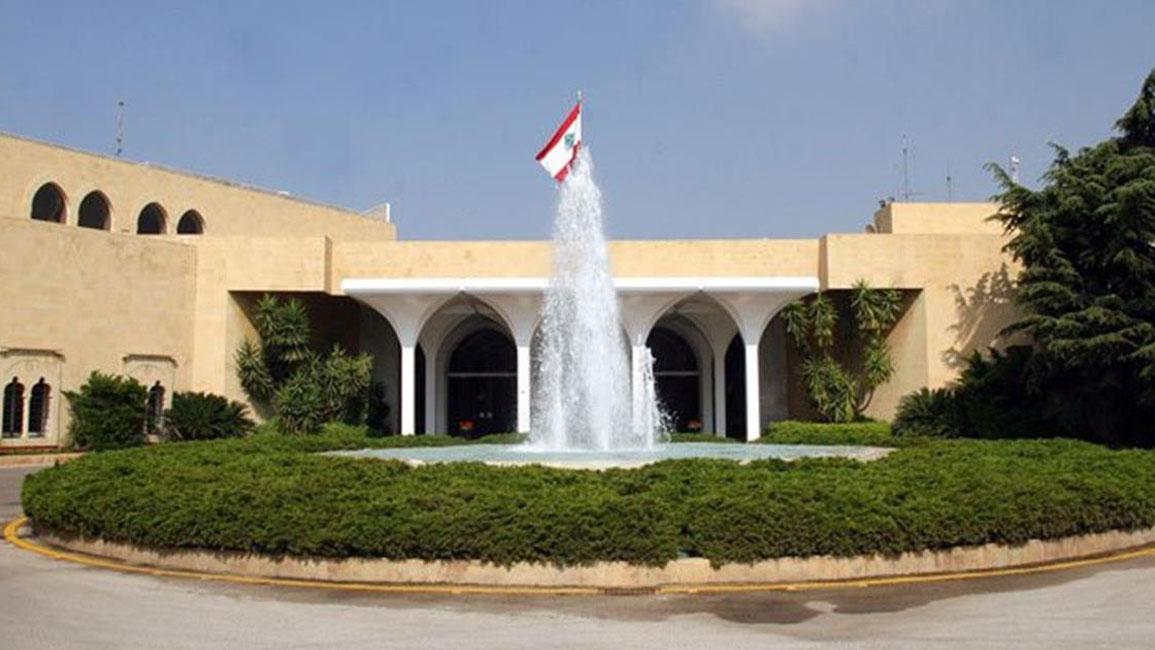
Today, President Joseph Aoun has become the target of criticism because he is willing to engage in efforts that could fundamentally change Lebanon’s future. Those who attack him portray diplomacy as weakness and dialogue as surrender. They are mistaken.
This moment represents one of the most significant diplomatic opportunities in Lebanon’s modern history. The ongoing peace discussions between Lebanon and Israel, facilitated under the leadership of the United States and the current Administration, offer the possibility of replacing decades of recurring conflict with a framework for stability, security, and mutual coexistence. Whether every detail is ultimately accepted or modified, the willingness of Lebanon’s leadership to engage in serious diplomacy is itself historic. It reflects a recognition that the Lebanese people deserve a future defined not by perpetual war, but by sovereignty, economic recovery, and lasting peace.
The real question is not whether peace is difficult. The real question is whether Lebanon can continue to survive another generation of recurring wars, economic devastation, political paralysis, and national decline.
For decades, the Lebanese people have carried an unbearable burden. Families have lost loved ones. Businesses have disappeared. Young professionals have left their homeland in search of opportunity abroad. Investors have lost confidence. Entire communities have lived with the constant fear that another war may be only months away.
No nation can build prosperity while preparing for the next conflict.
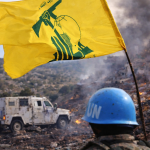
For decades, the Iranian regime has used Lebanon as a frontline in its regional strategy, often placing Lebanon’s stability and prosperity behind broader geopolitical objectives. Through its support for Hezbollah, Iran has helped sustain a system in which an armed organization operates outside the authority of the Lebanese state, weakening national institutions and limiting the ability of elected governments to exercise full sovereignty.
The greatest victims of this strategy have not been foreign governments. They have been the Lebanese people themselves. Every round of conflict has cost Lebanese lives, devastated infrastructure, discouraged investment, accelerated the departure of talented young people, and pushed the nation deeper into economic and political crisis. Lebanon deserves to be governed in Beirut, not influenced from Tehran.
President Joseph Aoun is attempting to achieve something that many believed impossible. He is working toward a Lebanon that lives in peace with its neighbors while fully restoring the authority of the Lebanese state over every inch of its territory.
That is not weakness. That is leadership.
Peace is first and foremost an investment in Lebanon’s future.
President Aoun’s vision represents a fundamental departure from the failed model that has kept Lebanon trapped between foreign influence, armed intimidation, and recurring conflict. His objective is to restore a Republic in which the Constitution governs, state institutions prevail, and the Lebanese Armed Forces alone are entrusted with the defense of the nation.
That is the very definition of sovereignty.
Those who accuse President Aoun of compromising Lebanon’s dignity misunderstand what true national dignity means. There is nothing dignified about allowing Lebanon to become a battlefield for the ambitions of others. There is nothing patriotic about accepting perpetual war as the nation’s destiny. Real patriotism means protecting the Lebanese people, preserving Lebanon’s independence, and ensuring that no armed organization stands above the authority of the state.
Hezbollah has repeatedly argued that its weapons protect Lebanon. Yet after decades of conflict, the Lebanese people are entitled to ask a simple question. Has this strategy produced security, prosperity, and sovereignty, or has it left Lebanon weaker, poorer, and more isolated?
The answer is visible in every community that has suffered repeated destruction, economic hardship, and the loss of another generation forced to seek opportunity abroad.
The overwhelming majority of Lebanese do not wake up each morning hoping for another confrontation. They want secure borders. They want economic opportunity. They want functioning institutions, reliable public services, quality education, and a government that answers only to the Lebanese people.
Most importantly, they want their children to inherit a country defined by hope instead of fear.
A truly sovereign Lebanon cannot exist while decisions involving war and peace remain outside the authority of its constitutional institutions.
Sovereignty means that only the Lebanese state has the authority to make decisions concerning the nation’s future. It means that the Lebanese Armed Forces serve as the sole legitimate defender of the Republic. It means that no foreign government, no outside influence, and no armed organization operating outside state authority should determine Lebanon’s national destiny.
For far too many years, Lebanon has paid an extraordinary price for regional conflicts that did not advance the interests of the Lebanese people.
Every round of violence has weakened the economy, discouraged investment, accelerated emigration, and undermined confidence in Lebanon’s future.
The Lebanese people deserve better. They deserve a nation that governs itself.
They deserve institutions that serve every citizen equally.
They deserve a future built upon sovereignty instead of dependency.
Those who criticize President Aoun should remember that history often judges courageous leadership far differently than political rhetoric does in the moment.
The leaders who changed history were rarely those who followed public pressure. They were those who accepted criticism because they understood that future generations mattered more than today’s headlines.
Pursuing peace requires courage.
Choosing diplomacy over destruction requires courage.
Defending Lebanon’s sovereignty against every form of foreign interference requires courage. Supporting the authority of the Lebanese state over every armed actor requires courage.
President Aoun has chosen that path.
His objective is not merely to end a conflict. His objective is to restore Lebanon to the Lebanese people.
No agreement by itself will solve every challenge facing Lebanon. Serious reforms remain necessary. Corruption must continue to be confronted. The economy must be rebuilt. Public confidence must be restored. The rule of law must be strengthened. State institutions must become stronger, more transparent, and more accountable.
Yet none of these goals can be fully achieved while Lebanon remains trapped in a permanent cycle of instability and recurring conflict.
Peace is not the end of the journey.
Peace creates the opportunity for national renewal.
A stable Lebanon can once again attract investment, welcome back members of its global diaspora, strengthen democratic institutions, expand economic opportunity, and restore its position as one of the leading countries of the Middle East.
Those who oppose every effort toward peace should be asked a simple question. If not diplomacy, then what? Another war? Another generation forced to emigrate? Another economic collapse?
Another chapter of destruction followed by reconstruction?
The Lebanese people have already paid that price too many times.
Real patriotism is measured by the willingness to secure a better future for one’s own nation, not by preserving an endless cycle of conflict.
This is why President Joseph Aoun’s willingness to pursue diplomacy and strengthen state institutions merits serious consideration and constructive support.. Leadership should never be measured solely by the popularity of difficult decisions.
Leadership should be measured by whether those decisions improve the lives of future generations.
Lebanon now stands at a historic crossroads.
One path leads toward continued instability, outside interference, economic decline, and recurring war.
The other leads toward sovereignty, constitutional government, economic recovery, regional stability, and lasting peace.
The choice should not be difficult.
The Lebanese people deserve to determine their own future.
They deserve a nation whose institutions are stronger than any armed faction. They deserve a government that answers only to its citizens.
They deserve neighbors with whom disagreements are resolved through diplomacy rather than warfare.
President Joseph Aoun has demonstrated the courage to pursue that vision.
Lebanon has spent decades serving as a battlefield for other nations. President Joseph Aoun is asking that it finally become a nation serving its own people. That is why this moment is historic. It is not simply about a memorandum of understanding or a peace process. It is about giving Lebanon its country back.
The greatest act of patriotism is not preparing your children for the next war. It is ensuring they never have to fight one.
About ALPI PAC
The American Lebanese Policy Institute Political Action Committee (ALPI PAC) is a U.S.-based political action committee dedicated to fostering a strong, constructive partnership between the United States and Lebanon. Through informed advocacy, policy dialogue, and bipartisan engagement, ALPI PAC works to advance American interests while promoting reform, stability, and prosperity in Lebanon consistent with democratic and sovereign principles.