ALPI PAC Concludes High-Level Strategic Mission to Lebanon
Strengthening U.S.–Lebanon Relations Through Institutional Engagement, Economic Partnership, and Strategic Dialogue
BEIRUT, LEBANON | July 2026
The American Lebanese Policy Institute Political Action Committee (ALPI PAC) successfully concluded a high-level strategic mission to Lebanon, reaffirming its commitment to strengthening the longstanding relationship between the United States and Lebanon through constructive dialogue, institutional engagement, economic cooperation, and support for Lebanon’s sovereignty and long-term stability.
Led by ALPI PAC President Paul Elhindi, the delegation included Executive Director Joseph Hage and Pamela Ibrahim El Kosseifi, Chairwoman of the American-Lebanese Advisory Council. Throughout the mission, the delegation engaged with senior government officials, Members of Parliament, economic institutions, business leaders, policy experts, and representatives of civil society to exchange perspectives on Lebanon’s current challenges and opportunities while advancing ALPI PAC’s mission of fostering stronger ties between the Lebanese-American community and policymakers in both countries.
The mission reflected ALPI PAC’s belief that lasting progress for Lebanon depends upon strong national institutions, responsible governance, sustainable economic growth, constructive international partnerships, and continued engagement with the Lebanese diaspora. At a time when Lebanon is pursuing institutional reform and economic recovery while navigating significant regional developments, the delegation sought to encourage dialogue, identify opportunities for cooperation, and reinforce the important role that Lebanese Americans can play in supporting Lebanon’s future.
Executive Summary
Over the course of its June 2026 mission, ALPI PAC conducted an extensive series of meetings across Lebanon involving senior government officials, Members of Parliament, regional authorities, economic organizations, industrial leaders, financial experts, and members of the American-Lebanese Advisory Council.
Among the mission’s principal engagements were meetings with His Excellency President General Joseph Aoun, Members of Parliament, leading economic institutions, and representatives of Lebanon’s private sector. During these meetings, ALPI PAC presented its Strategic Memorandum outlining the organization’s continued support for Lebanese sovereignty, institutional development, economic modernization, diaspora engagement, and strengthened cooperation between Lebanon and the United States.
The delegation also convened the American-Lebanese Advisory Council, bringing together distinguished leaders from the fields of constitutional law, economics, finance, entrepreneurship, industrial development, and public policy. The Council served as an important forum for discussing Lebanon’s development priorities and identifying practical opportunities for cooperation between Lebanon and the Lebanese-American community.
Throughout every meeting, several common themes emerged:
- Strengthening Lebanon’s legitimate state institutions and reinforcing national sovereignty.
- Supporting economic recovery through investment, entrepreneurship, and private-sector development.
- Expanding engagement between Lebanon and its global diaspora.
- Promoting institutional reform, transparency, and effective governance.
- Encouraging constructive dialogue and continued U.S.–Lebanon cooperation in support of long-term regional stability.
The mission reaffirmed ALPI PAC’s role as a Washington-based policy organization committed to facilitating informed dialogue, promoting bipartisan engagement, and serving as a constructive bridge between the Lebanese-American community and decision-makers in both Lebanon and the United States.
Mission Objectives
The June 2026 mission was undertaken to strengthen institutional relationships, expand strategic dialogue, and reinforce ALPI PAC’s long-standing commitment to Lebanon’s sovereignty, economic recovery, and democratic institutions.
The delegation pursued five principal objectives:
Strengthening Institutional Dialogue
To deepen engagement with Lebanon’s constitutional institutions, government officials, legislators, economic organizations, and civil society leaders while fostering relationships that support constructive cooperation between Lebanon and the United States.
Supporting Economic Recovery
To explore opportunities for investment, trade, entrepreneurship, and public-private cooperation capable of contributing to Lebanon’s long-term economic revitalization and improving conditions for sustainable growth.
Promoting Diaspora Engagement
To reinforce the important role of the Lebanese-American community as a strategic partner in Lebanon’s development by encouraging greater cooperation in business, education, investment, public policy, and institutional capacity-building.
Encouraging Regional Stability
To reaffirm ALPI PAC’s support for diplomatic engagement, responsible state institutions, and policies that contribute to regional stability, national sovereignty, and peaceful cooperation throughout the Middle East.
Presenting ALPI PAC’s Strategic Vision
To formally present ALPI PAC’s Strategic Memorandum to Lebanon’s senior leadership, outlining the organization’s policy perspectives on sovereignty, governance, institutional development, economic modernization, and future U.S.–Lebanon cooperation.
The ALPI PAC Delegation
The official delegation consisted of:
- Paul Elhindi, President of the American Lebanese Policy Institute Political Action Committee (ALPI PAC);
- Joseph Hage, Executive Director of ALPI PAC; and
- Pamela Ibrahim El Kosseifi, Chairwoman of the American-Lebanese Advisory Council.
Together, the delegation represented ALPI PAC’s ongoing commitment to promoting informed public policy, strengthening bilateral engagement, and expanding opportunities for collaboration between Lebanon, the Lebanese-American community, and policymakers in Washington.
The mission also reflected the growing role of the American-Lebanese Advisory Council, established in 2025 to bring together distinguished professionals from the fields of economics, finance, governance, entrepreneurship, industry, law, and public policy. Through independent analysis and strategic dialogue, the Council seeks to contribute ideas and expertise that support Lebanon’s long-term stability, institutional development, and economic prosperity.
Engaging Lebanon’s National Leadership
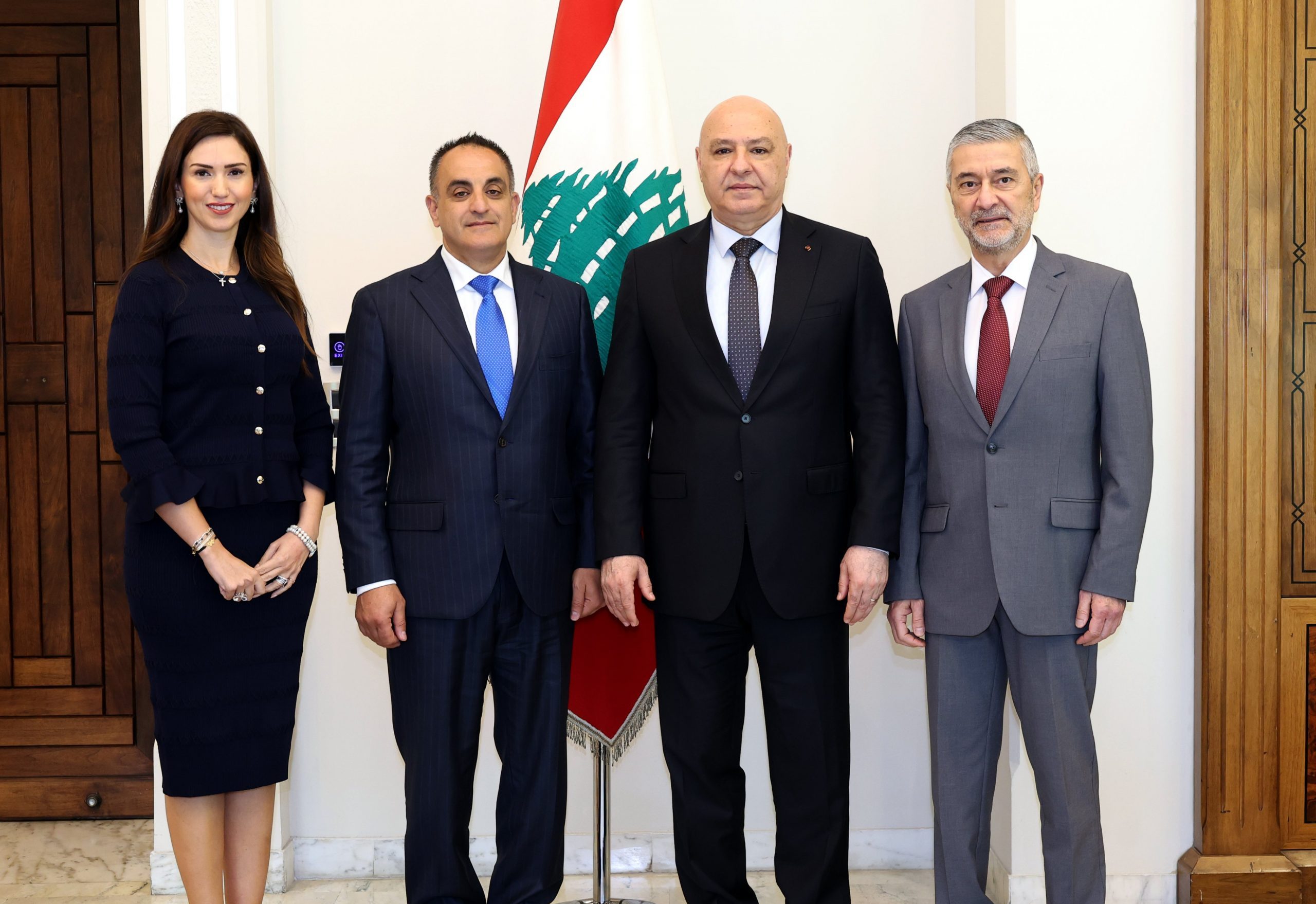
President Joseph Aoun receives the ALPI PAC delegation and members of the American–Lebanese Advisory Council at Baabda Presidential Palace.

One of the principal milestones of ALPI PAC’s strategic mission to Lebanon was the delegation’s meeting with His Excellency President General Joseph Aoun at Baabda Presidential Palace.
President Aoun received the ALPI PAC delegation together with members of the American-Lebanese Advisory Council, where the delegation presented the organization’s mission, its ongoing activities in the United States, and its vision for strengthening constructive engagement between Lebanon, the Lebanese-American community, and policymakers in Washington.
President Paul Elhindi introduced the work of the American-Lebanese Advisory Council, established in 2025 to bring together distinguished experts in economics, finance, governance, entrepreneurship, law, industry, and national development. The delegation explained that the Council serves as an independent platform for policy analysis and strategic dialogue while encouraging stronger cooperation between Lebanon and the United States on issues affecting long-term stability, economic development, and institutional resilience.
During the meeting, the delegation highlighted the important role of Lebanese Americans in strengthening Lebanon’s presence within political, economic, academic, and policy circles throughout the United States. Discussions emphasized the value of leveraging the extensive expertise, professional experience, and institutional networks of the Lebanese diaspora to support Lebanon’s development and strengthen bilateral relations.
The delegation also presented ALPI PAC’s Strategic Memorandum, which outlines the organization’s continued support for Lebanese sovereignty, strong national institutions, economic recovery, and constructive engagement between Lebanon and the United States. The memorandum reflects ALPI PAC’s commitment to encouraging policies that promote stability, responsible governance, sustainable development, and long-term cooperation between both countries.
A significant portion of the discussion focused on the importance of diplomacy and dialogue in addressing regional challenges and creating conditions conducive to lasting stability. The participants recognized the importance of supporting peaceful initiatives and direct diplomatic engagement as mechanisms for addressing outstanding issues, reducing regional tensions, and strengthening prospects for long-term peace and security.
The meeting reaffirmed ALPI PAC’s commitment to maintaining open channels of communication with Lebanon’s constitutional institutions and to serving as a constructive bridge between the Lebanese-American community and policymakers in both Lebanon and the United States. It also reflected the organization’s belief that continued dialogue, strong institutions, and responsible leadership remain essential to Lebanon’s future prosperity and regional stability.
The opportunity to meet with President Aoun represented an important milestone in ALPI PAC’s institutional engagement with Lebanon and reinforced the organization’s commitment to supporting initiatives that strengthen state institutions, encourage economic recovery, and promote a sovereign, stable, and prosperous Lebanon.
Advancing Economic Recovery and Sustainable Development
Economic recovery constituted one of the central pillars of ALPI PAC’s strategic mission to Lebanon. Throughout the visit, the delegation engaged with regional authorities, business organizations, economists, and private-sector leaders to better understand Lebanon’s current economic landscape, identify opportunities for future cooperation, and encourage stronger engagement between Lebanon’s productive sectors and the Lebanese-American community.
The discussions consistently highlighted the importance of restoring investor confidence, encouraging entrepreneurship, supporting productive industries, and strengthening partnerships capable of contributing to Lebanon’s long-term economic resilience.
Meeting with Bekaa Governor Judge Kamal Abou Jaoudeh

The mission commenced in the Bekaa Governorate with a meeting between the ALPI PAC delegation and Governor Judge Kamal Abou Jaoudeh, providing an opportunity to examine the region’s administrative, developmental, and economic priorities.
The discussion offered a comprehensive overview of the political, economic, social, and administrative realities facing the Bekaa, while highlighting the opportunities and challenges associated with regional development. Particular attention was given to initiatives capable of stimulating economic activity, improving public services, and strengthening local governance.
The dialogue also explored the importance of sustainable development projects and effective public-private partnerships as mechanisms for creating employment opportunities and supporting long-term regional growth. Participants emphasized that stronger collaboration between governmental institutions, the private sector, international partners, and the Lebanese diaspora can play an important role in restoring confidence in Lebanon’s economy and supporting development initiatives throughout the Bekaa Governorate.
Meeting with the Bekaa Industrialists Association

As part of its continued engagement with Lebanon’s productive sectors, the delegation met with the Bekaa Industrialists Association at the Gardenia Grain d’Or facilities in Zahle, where the meeting was hosted by Association President Nicolas Abou Fayssal and attended by members of the Association.
Discussions focused on the current economic environment in the Bekaa and the opportunities available to strengthen Lebanon’s industrial sector through expanded trade, investment, and international cooperation.
Participants examined opportunities to increase Lebanese exports to the United States, improve the legislative environment governing trade and investment, and encourage policies that support industrial growth and sustainable economic development. The meeting also underscored the important contribution of Lebanon’s manufacturing sector to national economic recovery and the value of strengthening commercial relationships between Lebanese producers and international markets.
The exchange reflected a shared recognition that expanding private-sector opportunities remains an essential component of Lebanon’s broader economic revitalization.
Meeting with the Lebanese Economic Organizations

The meeting with the Lebanese Economic Organizations (LEO) represented one of the mission’s principal economic engagements, bringing together leaders of Lebanon’s private sector to discuss the country’s recovery strategy and long-term economic outlook.
Recognizing the importance of restoring confidence in Lebanon’s economy, discussions centered on the role of the private sector in driving economic growth, attracting investment, and supporting sustainable development.
Both sides emphasized that Lebanon’s current circumstances require stronger coordination between domestic economic institutions and the Lebanese diaspora in the United States. Participants noted that Lebanese-American entrepreneurs, investors, and professionals possess significant expertise and international networks that can contribute meaningfully to Lebanon’s recovery and future competitiveness.
The meeting explored a broad range of policy priorities, including strengthening private-sector participation in economic recovery, expanding investment opportunities across productive and service industries, establishing sustainable partnerships between Lebanese and American businesses, encouraging privatization initiatives that support economic reform, and accelerating the implementation of e-government to improve transparency, governance, and administrative efficiency.
Participants further emphasized that stronger economic cooperation between Lebanon and the United States can contribute to long-term growth, encourage innovation, and create new opportunities for investment and employment.
Meeting with Economist Dr. Nassib Ghobril

The delegation concluded its economic consultations with a meeting with Dr. Nassib Ghobril, one of Lebanon’s leading financial and economic analysts.
The discussion provided an in-depth assessment of Lebanon’s current financial and economic conditions, examining both the challenges confronting the country’s economy and the reforms necessary to restore confidence among investors, financial institutions, and international partners.
Participants exchanged views on fiscal and monetary policy, the modernization of Lebanon’s financial sector, and strategies capable of stimulating investment while supporting sustainable economic growth. The conversation also examined the importance of rebuilding confidence in Lebanon’s banking sector and implementing reforms that strengthen economic stability over the long term.
The meeting reinforced the mission’s broader conclusion that sustainable recovery will depend upon responsible economic governance, institutional reform, private-sector engagement, and continued cooperation between Lebanon, its international partners, and the Lebanese diaspora.
Throughout each of these engagements, a consistent message emerged: Lebanon possesses significant economic potential, a dynamic private sector, and an accomplished global diaspora capable of contributing to national recovery. Unlocking that potential will require continued institutional reform, investment-friendly policies, transparent governance, and stronger partnerships between Lebanon and the international community.
ALPI PAC remains committed to encouraging those partnerships and supporting initiatives that contribute to Lebanon’s long-term economic resilience, prosperity, and sustainable development.
Strengthening Parliamentary Dialogue and Public Policy Engagement
A fundamental objective of ALPI PAC’s mission was to expand institutional dialogue with Lebanon’s legislative leadership and public policy community. Through meetings with Members of Parliament and national policy leaders, the delegation exchanged perspectives on Lebanon’s political landscape, institutional reform, governance, and the important role that the Lebanese diaspora can play in supporting national development.
These engagements reflected ALPI PAC’s commitment to encouraging constructive dialogue with policymakers across Lebanon’s democratic institutions while reinforcing relationships that support stronger U.S.–Lebanon cooperation and long-term national stability.
Meeting with President of the Lebanese Kataeb Party and Member of Parliament Samy Gemayel

The ALPI PAC delegation also met with Member of Parliament Samy Gemayel, President of the Lebanese Kataeb Party, as part of its ongoing dialogue with Lebanon’s parliamentary leadership and political institutions.
The discussion focused on Lebanon’s current political and economic landscape, the importance of strengthening democratic institutions, advancing meaningful reforms, and reinforcing effective governance as essential pillars of long-term national stability and economic recovery. Participants also exchanged views on the role of the Lebanese diaspora in strengthening Lebanon’s international engagement, encouraging investment, and expanding cooperation between Lebanon and the United States.
The meeting further emphasized the importance of maintaining constructive dialogue among Lebanon’s political leaders and fostering stronger communication with Lebanese-American policymakers and community leaders in support of Lebanon’s national interests, institutional development, and long-term prosperity.
Meeting with MP Ragy El Saad

The delegation met with Member of Parliament Ragy El Saad to discuss the importance of strengthening communication between Lebanon and international decision-making centers, particularly in the United States.
The discussion emphasized the value of building effective channels of dialogue among policymakers, legislators, and institutional leaders to advance Lebanon’s national interests and reinforce strategic partnerships that support long-term stability and economic recovery.
Participants also highlighted the important role of the Lebanese diaspora—particularly those serving in leadership positions across government, business, academia, and the private sector—in advocating for Lebanon, encouraging investment, expanding trade opportunities, and strengthening bilateral cooperation between Lebanon and the United States.
The meeting concluded with a shared recognition that sustained dialogue and stronger institutional networks remain essential to supporting Lebanon’s development and expanding its international partnerships.
Meeting with MP Ashraf Rifi

The delegation also met with Member of Parliament Ashraf Rifi, where discussions focused on Lebanon’s current political environment and the broader regional developments shaping the country’s future.
The exchange examined several of the challenges confronting Lebanon, including the importance of institutional reform, reinforcing state institutions, and preserving political and security stability as fundamental conditions for sustainable economic recovery.
Participants also discussed the future of U.S.–Lebanon relations and the continued importance of the Lebanese diaspora in strengthening international engagement, supporting reform efforts, encouraging investment, and contributing to Lebanon’s long-term stability and prosperity.
The discussion reflected the shared understanding that effective institutions, responsible governance, and sustained international engagement remain critical components of Lebanon’s continued progress.
Meeting with Former Minister Dr. Nasser Yassin

As part of the mission’s broader policy dialogue, the delegation met with Former Minister Dr. Nasser Yassin to exchange views on Lebanon’s national priorities and the principal concerns facing citizens across the country.
Discussions explored the social, economic, and environmental challenges confronting Lebanon while emphasizing the importance of public policies capable of responding effectively to the needs and expectations of the Lebanese people.
Participants discussed the importance of supporting development initiatives, encouraging institutional reform, improving governance, and strengthening public services as essential elements of long-term national resilience and sustainable development.
The meeting reinforced the importance of adopting practical, citizen-centered policy solutions that contribute to improving quality of life while strengthening confidence in public institutions.
Meeting with MP Razi El Hage

The delegation concluded its parliamentary engagements with a meeting with Member of Parliament Razi El Hage, providing an opportunity to continue dialogue on current national developments and issues of shared interest.
Discussions focused on Lebanon’s evolving political landscape, the challenges facing state institutions, and the importance of preserving democratic governance through constructive dialogue among Lebanon’s diverse political components.
Participants reaffirmed the valuable role that Lebanese communities abroad can play in supporting Lebanon politically, economically, and internationally. Particular emphasis was placed on leveraging the expertise and global networks of the Lebanese diaspora to strengthen Lebanon’s presence within international policy, business, and academic communities.
The meeting also underscored the importance of maintaining continuous communication between Lebanese leaders at home and abroad, exchanging ideas on issues of common concern, and encouraging collaborative approaches that support national reform, institutional development, and long-term state-building.
Building Enduring Institutional Relationships
Although each meeting addressed different policy priorities and national challenges, a common theme emerged throughout ALPI PAC’s parliamentary engagements: Lebanon’s long-term success depends upon strong democratic institutions, responsible governance, meaningful reform, and continued dialogue among government leaders, civil society, the private sector, and the Lebanese diaspora.
These meetings reinforced ALPI PAC’s conviction that sustained institutional engagement—both within Lebanon and between Lebanon and the United States—can contribute to stronger bilateral relationships, informed public policy, and greater opportunities for cooperation across political, economic, and educational sectors.
As a Washington-based policy organization, ALPI PAC remains committed to fostering constructive relationships with Lebanese policymakers and supporting initiatives that strengthen democratic institutions, encourage reform, and promote a sovereign, stable, and prosperous Lebanon.
Advancing Policy Dialogue Through the American–Lebanese Advisory Council and Public Engagement
A defining component of ALPI PAC’s June 2026 mission was the continued development of the American–Lebanese Advisory Council, an initiative established in 2025 to bring together distinguished leaders from the fields of law, economics, finance, governance, entrepreneurship, industry, academia, and public policy.
The Council serves as an independent forum dedicated to promoting informed policy dialogue, encouraging strategic cooperation, and strengthening engagement between the Lebanese-American community and decision-makers in both Lebanon and the United States. Through its multidisciplinary approach, the Council seeks to contribute ideas and expertise that support Lebanon’s long-term stability, institutional development, and economic prosperity.
American–Lebanese Advisory Council Meeting

The Advisory Council convened its official meeting on June 16, 2026, bringing together experts and national leaders to discuss issues of strategic importance to Lebanon’s future.
The program opened with welcoming remarks by Pamela Ibrahim El Kosseifi, Chairwoman of the American–Lebanese Advisory Council, followed by opening addresses from Paul Elhindi, President of ALPI PAC, and Joseph Hage, Executive Director of ALPI PAC.
The conference featured presentations by distinguished speakers representing a broad range of professional disciplines and national institutions.
Among the principal presentations was “The Centennial of the Lebanese Constitution: A National Milestone Between Legacy and Aspirations,” delivered by Dr. Antoine Sfeir, Legal Counsel to the President of the Republic for Constitutional Affairs and International Law. His presentation examined the historical significance of the Lebanese Constitution while exploring the opportunities and challenges associated with constitutional governance as Lebanon approaches its second century.
Economic development and regional investment opportunities also featured prominently during the conference.
Dr. Hani Al Shaarani, Chairman of the Board of the Rashid Karami International Fair, presented “Tripoli: Promising Opportunities for Development and Investment,” highlighting the city’s strategic potential for commercial growth, infrastructure development, and investment attraction.
The discussion continued with Dr. Hassan Dhanawi, Chairman of the Tripoli Special Economic Zone, who outlined the opportunities presented by the Tripoli Special Economic Zone as a catalyst for industrial development, foreign investment, and job creation.
The conference concluded with a presentation by Dr. Georges Nour, Real Estate Development and Urban Economics Consultant, entitled “Tyre: The City of Peace Confronting the Challenges of Peace.” His presentation explored the relationship between urban development, economic resilience, and the preservation of one of Lebanon’s most historically significant cities.
The formal presentations were followed by an interactive discussion that allowed participants to exchange perspectives on Lebanon’s constitutional development, economic reform, investment priorities, regional competitiveness, and opportunities for future cooperation between Lebanon and the Lebanese diaspora.
The Advisory Council meeting demonstrated the value of bringing together experts from multiple disciplines to contribute practical ideas and strategic perspectives capable of supporting Lebanon’s long-term national development.
Public Outreach and Media Engagement
As part of its commitment to public dialogue and civic engagement, ALPI PAC also participated in a media interview on Voice of Lebanon Radio, extending the mission’s discussions beyond institutional meetings to the broader public.

During the interview, Joseph Hage, Executive Director of ALPI PAC, discussed the mission’s objectives and shared the organization’s perspective on the opportunities and challenges facing Lebanon.
The conversation emphasized the importance of political and security stability as fundamental prerequisites for restoring investor confidence, encouraging economic growth, and revitalizing Lebanon’s productive sectors.
The interview also explored the importance of political and economic reforms in strengthening international engagement with Lebanon and improving the country’s prospects for sustainable recovery. Particular attention was given to the influential role of the Lebanese-American community in promoting Lebanon’s interests, strengthening bilateral relations, and expanding the country’s presence within political, economic, and institutional circles throughout the United States.
Additional discussion focused on the conditions necessary for successful economic recovery, including comprehensive reform, responsible governance, and a long-term national vision capable of restoring both domestic and international confidence.
Mr. Hage also emphasized Lebanon’s considerable competitive advantages—including its strategic geographic location, highly educated workforce, entrepreneurial culture, and accomplished global diaspora—while noting that realizing these advantages depends upon continued stability, institutional reform, and sound economic policy.
The interview concluded with a discussion of the principal challenges that could affect Lebanon’s recovery, including prolonged political uncertainty, delays in implementing reforms, and continuing regional instability. At the same time, it underscored the importance of capitalizing on the current opportunity to strengthen state institutions, restore economic confidence, and position Lebanon for sustainable long-term growth.
Mission Outcomes
ALPI PAC’s June 2026 strategic mission represented an important step in strengthening institutional relationships between the Lebanese-American community and Lebanon’s political, economic, and policy leadership.
Throughout the mission, the delegation engaged with senior government officials, Members of Parliament, regional authorities, business organizations, economists, constitutional experts, and civil society leaders in discussions centered on Lebanon’s future and the opportunities available to strengthen cooperation between Lebanon and the United States.
Several common priorities consistently emerged throughout the mission:
- Reinforcing Lebanon’s sovereign state institutions and democratic governance;
- Supporting economic recovery through investment, entrepreneurship, and private-sector growth;
- Expanding constructive engagement between Lebanon and its global diaspora;
- Encouraging institutional reform, transparency, and responsible governance;
- Promoting dialogue and international cooperation in support of long-term regional stability.
The mission also reaffirmed the growing importance of the American–Lebanese Advisory Council as a platform for independent policy dialogue and demonstrated ALPI PAC’s commitment to serving as a constructive bridge between Lebanese-American leaders and policymakers in both countries.
The American Lebanese Policy Institute Political Action Committee (ALPI PAC) is a Washington, D.C.-based federal political action committee dedicated to strengthening U.S.–Lebanon relations, promoting informed public policy, supporting democratic institutions, encouraging constructive dialogue, and fostering engagement between the Lebanese-American community and policymakers in the United States.